
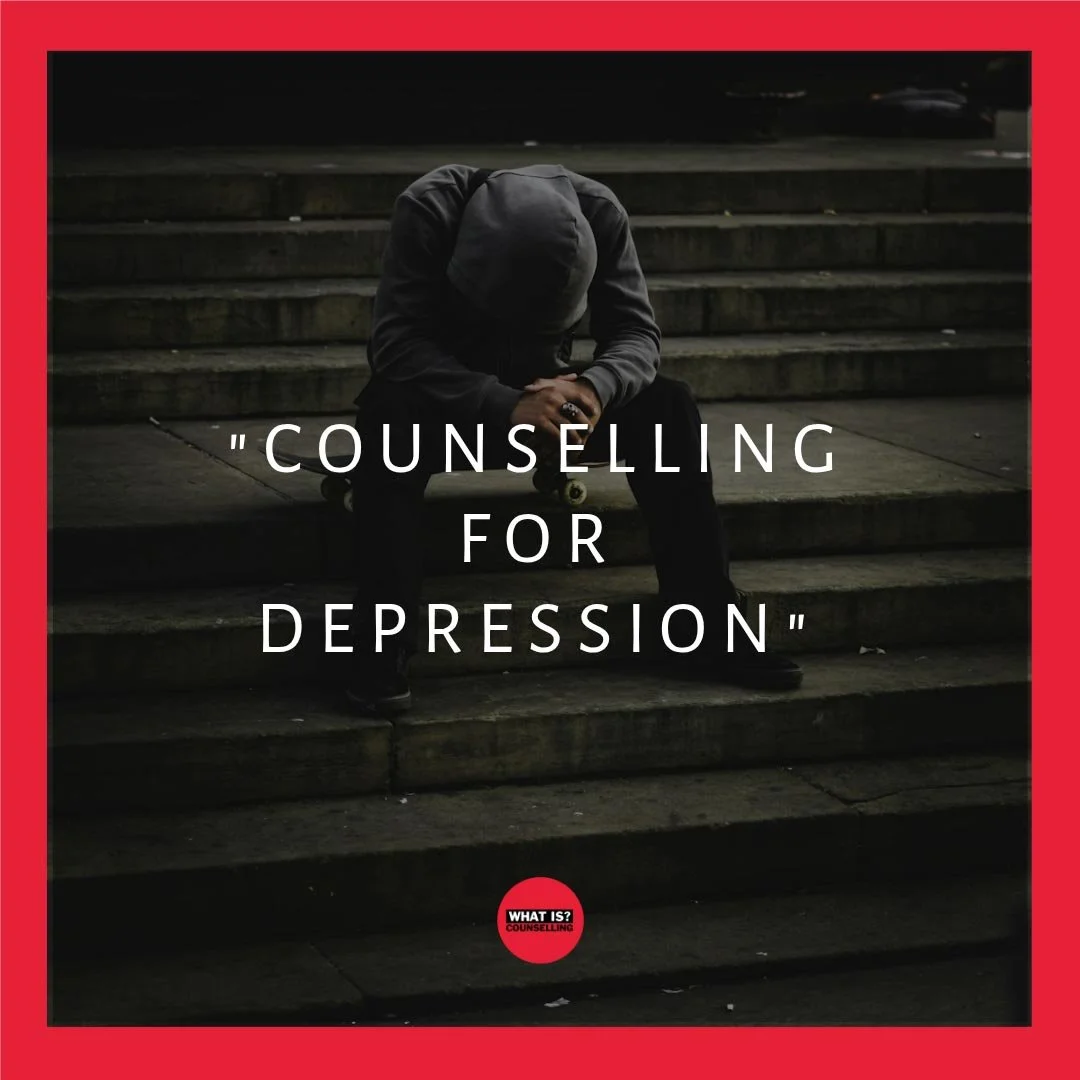
Depression Counselling
Feeling Low, Stuck or Numb?”

Jump to any section:
When Life Feels Heavy
What Depression Can Feel Like
Why Do I Feel This Way?
Signs You Might Need Depression Counselling
Depression and Relationships
The Impact Depression Can Have on Your Life
How Depression Counselling Can Help
What to Expect from Depression Counselling
What Sessions Are Like
A More Hopeful Way Forward
How to Cope with Depression Day-to-Day
Is Depression a Mental Health Problem?
Frequently Asked Questions About Depression Counselling
A Person-Centred Approach to Depression Counselling
Where I offer depression counselling
Reviews & Affiliations
Take the First Step
When you’re living with depression, even small things can start to feel heavy. You might feel stuck in your thoughts, disconnected from others, or unsure how things became this way.
It’s not always obvious what’s causing it — and trying to push through on your own can feel exhausting.
In our work together, we create a space where you don’t have to hide how you’re really feeling. A place to gently explore what’s going on, make sense of your experience, and begin to reconnect with yourself.
I'm often struck by the strength people show in coming to counselling to navigate their depression.
Depression, by its very nature, can be deeply debilitating and make even leaving the house feel like an impossible task. One of the greatest privileges of my work is seeing clients commit to the possibility of a different future and allow difficult emotions into our shared space.
I've often found that simply being able to say those feelings out loud, and having them received without judgement, can be a deeply healing experience in itself.
When Life Feels Heavy
Many people I work with describe a sense that something just isn’t right — like they’re going through the motions, but not really in their life.
They often find themselves:
low on energy or motivation
feeling flat, numb, or disconnected
overthinking or withdrawing from others
having “what’s the point?” thoughts
At times, even simple things can feel like a struggle. You might feel stuck, lost, or unsure how things ended up this way.
Depression can begin to affect every part of life — your relationships, your work, and how you feel about yourself.
If this sounds familiar, you’re not alone — and there are ways to begin to feel better. There is a way forward, even if it doesn’t feel like it right now.
What Depression Can Feel Like
Depression can affect every part of you — your thoughts, your body, and how you experience daily life. It can feel like a cycle that’s difficult to break.
You might recognise some of this:
emotional (hopelessness, numbness)
physical (tiredness, sleep issues)
behavioural (withdrawing, avoiding others)
When you’re feeling emotionally drained or low, others may start to notice. You might seem more distant or “switched off,” and comments like “you don’t seem yourself” can be hard to hear. Over time, this can deepen the sense of disconnection.
That emotional weight can also become physical. Even simple things can feel exhausting — getting out of bed, concentrating at work, or keeping up with everyday life. Sleep is often affected too, leaving you feeling even more drained.
Depression can also lead to withdrawing from others. It might feel safer to be alone, but over time this can increase feelings of isolation and loneliness — reinforcing the cycle and making it harder to reach out.
For some people, depression doesn't feel like sadness at all. Instead, it can feel as though emotions have become distant or difficult to access, leaving life feeling flat, empty or disconnected. If that sounds familiar, you may find my article on Why Do I Feel Numb All The Time? helpful.
Why Do I Feel This Way?
You might be wondering why you feel this way — especially if nothing obvious has ‘caused’ it. There is no shame in depression. It can affect anyone, at any time, and often for reasons that aren’t immediately clear.
Sometimes, depression isn’t random — it can be connected to things that have been building up beneath the surface.
Depression can be linked to things like:
emotional build-up
life stress or loss
suppressed feelings
Over time, unprocessed emotions can begin to weigh heavily. When there isn’t a safe or effective way to understand and express what you’re feeling, it can become overwhelming — and shutting down can start to feel like the only way to cope.
Ongoing stress can also play a part. Work, relationships, daily pressures, or even the constant noise of modern life can quietly build up over time, leaving you feeling exhausted and unable to see a way forward.
When feelings are pushed down or left unresolved, they don’t just disappear. They can turn into overthinking, self-doubt, anger, guilt, or a harsh inner voice. If you don’t feel heard or understood, it can become easier to withdraw — leading to a deeper sense of isolation.
Relationships are also a big part of this. When they become strained, distant, or break down, it can feel incredibly painful and lonely — especially if you’re facing it on your own.
Signs You Might Need Depression Counselling
Depression doesn’t always look the way people expect it to.
For some, it’s a persistent low mood that doesn’t seem to lift. For others, it can be quieter — a sense of disconnection, irritability, or feeling flat, even when life on the outside appears to be “fine”.
You might notice that something has shifted, but it’s hard to put your finger on exactly what.
You may recognise some of the following:
Feeling low, numb, or emotionally drained for much of the time
Losing interest in things you used to enjoy
Struggling with motivation — even small tasks can feel overwhelming
Overthinking, self-criticism, or feeling stuck in your own thoughts
Withdrawing from others or finding it harder to connect
Feeling more irritable, frustrated, or on edge than usual
Changes in sleep — difficulty switching off, or wanting to sleep more
Low energy, both physically and mentally
A sense that you’re just getting through the day rather than really living
Sometimes these feelings develop gradually, over time. Other times, they may follow a difficult experience, a period of stress, or a significant life change.
You might also find yourself questioning whether what you’re feeling is “serious enough” to seek help. This is something many people struggle with.
But counselling isn’t only for moments of crisis.
Often, people reach out when they begin to notice patterns forming — when things feel stuck, heavy, or no longer like themselves. It might be a quiet sense that something isn’t quite right, even if everything looks okay on the surface.
You don’t need to have all the answers before starting.
If any of this feels familiar, it could be a sign that having a space to talk — somewhere you can be heard and understood without judgement — may help you begin to make sense of what’s going on.
From there, we can start to explore things together, gently and at your pace, and begin to find a way forward that feels right for you.
Depression and Relationships
Depression can have a powerful impact on relationships — often in ways that are hard to see or explain.
When you’re struggling internally, it can be difficult for others to fully understand what you’re going through — especially if putting it into words feels almost impossible.
This can often show up as:
withdrawing from a partner
feeling misunderstood
irritability or emotional shutdown
a growing sense of disconnection
When you’re hurting, expressing how you feel can take a huge amount of energy. You might worry about being a burden, or feel like others won’t really understand. Sometimes it can feel easier to keep things to yourself — even if part of you wants to reach out.
Over time, this can lead to feeling unseen or unheard. If attempts to open up don’t go as hoped, it can become harder to try again — and withdrawing can start to feel like the safer option.
Depression can also show up as irritability, frustration, distance, or feeling overwhelmed in your reactions. You might find yourself pulling away from people you care about, or struggling to feel close to them. On the surface, this can look like shutting down — but underneath, there can be a lot of emotion that’s difficult to share.
The more disconnected things feel, the easier it is for loneliness to take hold — reinforcing the cycle and making it harder to reconnect.
Counselling offers a space where you don’t have to hold this on your own. It’s a place to be heard, understood, and to begin making sense of what’s happening — so that connection, both with yourself and others, can start to rebuild.
The Impact Depression Can Have on Your Life
Depression can affect many areas of life — sometimes gradually, without you fully realising it at first. Things might just feel “off” for a while, before becoming harder to ignore.
You might notice changes in:
work
confidence
identity
daily functioning
Work can start to feel more difficult. You might lose interest, struggle to concentrate, or feel less fulfilled in what you’re doing. Even if things look the same on the outside, it can feel very different internally.
Confidence often takes a hit too. You might feel more self-conscious, worry about saying or doing the wrong thing, or begin avoiding situations that once felt manageable.
Depression can also affect how you see yourself. You might feel disconnected from who you used to be, or unsure of who you are now. Things that once brought enjoyment can start to feel flat or meaningless.
Day-to-day tasks can become harder as well. Simple things like getting up, looking after yourself, or keeping on top of routines can feel overwhelming at times.
All of this can build into a sense of being stuck — where things feel difficult to change, even if part of you wants them to.
Counselling offers a space to slow things down and make sense of what’s happening. You don’t have to carry it all on your own — and with the right support, things can begin to feel more manageable again.
Depression can often feel like being caught in a cycle — where the same thoughts, feelings, and patterns repeat, making it difficult to find a way forward.
Counselling offers a space to begin gently interrupting that cycle.
One of the first things many people notice is the relief of being able to speak openly. Instead of holding everything in or trying to manage it alone, you have a regular, reliable place where your experience can be heard and understood without judgement. This alone can begin to ease some of the emotional weight you’ve been carrying.
From there, we can start to make sense of what’s been happening.
Together, we might explore the patterns that have developed — the thoughts that keep returning, the emotional responses that feel overwhelming, or the behaviours that have gradually changed over time. Rather than trying to “fix” things quickly, we take time to understand them.
As this understanding grows, something begins to shift.
Thoughts that once felt all-consuming can start to feel more manageable. Emotions that felt overwhelming can become easier to sit with. And the sense of being stuck can begin to soften, creating space for something new.
Counselling also supports small, meaningful changes in day-to-day life.
When you feel more supported and less alone, it can become easier to take small steps — whether that’s reconnecting with someone, reintroducing a routine, or simply taking better care of yourself. These changes don’t happen through pressure, but through a growing sense of capacity and resilience.
Another important part of the process is consistency.
Having a regular session creates a steady point in your week — something you can rely on. Many people find comfort in knowing there is a space where they can return to, especially during more difficult periods. This can help reduce the feeling of carrying everything on your own.
Over time, counselling can help to gently break the cycle of depression.
Not all at once, but gradually — through understanding, support, and small shifts that begin to build. As this happens, people often find they start to feel more connected to themselves, more able to cope, and more hopeful about the future.
How Depression Counselling Can Help
What to Expect from Depression Counselling
Starting counselling can feel like a big step — especially if you’re not sure what to expect.
Sessions are a space where you can talk openly about how things really feel, without pressure or judgement. You don’t need to have the “right words” or know where to begin — we can take that at your pace.
You’re free to bring whatever feels most important to you. That might be how you’ve been feeling recently, something from the past, or simply a sense that things aren’t quite right.
My role is to listen carefully, help you make sense of what’s going on, and support you in exploring it more deeply. We work together, rather than me telling you what to do.
There’s no pressure to move quickly. Some people find it takes time to open up — and that’s completely okay. As trust builds, many people find it becomes easier to talk and understand themselves more clearly.
Over time, this process can help you feel more grounded, more understood, and better able to respond to what you’re going through.
You don’t have to figure it all out on your own.
What Sessions Are Like
Imagine arriving for your first counselling session.
You step out of your car and take a breath. There might be a sense of nervousness — wondering what it will be like, whether you’ll know what to say, or even if you’ll be able to put how you feel into words.
You might find yourself thinking about what I’ll ask, what the space will feel like, or how you’ll come across.
When we meet, I’ll greet you warmly.
“Hi, I’m James — it’s really good to meet you.”
We’ll head into the counselling room and get settled. It’s a calm, comfortable space — somewhere you don’t have to perform or get things “right”.
The view looks out over the valley — open, green, and spacious. Many people notice they begin to breathe a little more easily as they sit down.

And we begin, simply, by talking.
There’s no pressure to say anything in a particular way. You won’t be interrogated or analysed. Instead, we’ll have a natural conversation — one that moves at your pace.
I’ll explain a little about how counselling works and how it might support you, and you can ask anything that’s on your mind.
People are often surprised by how different it feels from what they expected.
It’s not about being judged or told what to do — it’s about being heard, understood, and having the space to explore what’s been difficult.
As we talk, things often begin to settle. What felt unclear or overwhelming can start to feel a little more manageable. There may even be moments of relief — or a sense that something has shifted, even slightly.
By the end of the session, we’ll think together about what feels right for you going forward — whether that’s meeting weekly, fortnightly, or taking some time to reflect.
There’s no pressure — just a growing sense of whether this feels like something you can trust.
It’s completely natural to still feel unsure at this stage. But often, there’s also a quiet sense that something important has begun — that things don’t have to stay the same.
And that sense, however small, can be the start of meaningful change.
A More Hopeful Way Forward
It might not feel like it right now, but things can begin to change.
Counselling offers a space where you can be exactly as you are — whether that’s low, numb, overwhelmed, or unsure. You don’t have to explain everything perfectly, and there’s no judgement.
At the heart of the work is understanding. Taking the time to really hear what’s going on for you, and making sense of it together. Sometimes that means talking, and sometimes it simply means having space to pause and breathe.
As a humanistic counsellor, I focus on your experience — what things feel like for you, and what matters most in your life. We work together at a pace that feels manageable, exploring things in a way that feels safe and supportive.
Over time, many people find that things begin to feel a little clearer, a little lighter, and more manageable. Not all at once — but step by step.
There are ways forward, even if you can’t quite see them yet.
Depression can be difficult to live with, but there are small, practical steps that can help make things feel a little more manageable.
Start small
Small steps really do matter. When you’re struggling, even the simplest things can feel like a big effort. Noticing and acknowledging those small wins can begin to shift how you see your progress.
Build simple routines
Having a small amount of structure can help. Something as simple as getting up at a similar time each day or brushing your teeth regularly can create a sense of momentum. One small action can make the next feel more achievable.
Be kinder to yourself
Many people notice a harsh inner voice during depression. Speaking to yourself with more understanding — the way you might speak to someone you care about — can ease some of that pressure and emotional weight.
Reduce pressure where you can
Depression is often made heavier by thoughts about what you “should” be doing. Where possible, try to ease that pressure. Giving yourself permission to go at your own pace can make things feel less overwhelming.
These aren’t quick fixes, but they can be a starting point. In counselling, we can explore what works best for you and build on it in a way that feels realistic and supportive.
How to Cope with Depression Day-to-Day
Is Depression a Mental Health Problem?
Depression is often described as a mental health problem — but that doesn’t mean there’s something “wrong” with you.
It’s a very human response to difficult experiences, stress, loss, or emotional overwhelm. For some people, it can feel like a low mood that comes and goes. For others, it can feel deeper, longer-lasting, and harder to shift.
Everyone’s experience of depression is different.
Some people may receive a formal diagnosis, while others simply recognise that they’re struggling and need support. You don’t need a label or diagnosis to benefit from counselling — what matters is how things are affecting you.
Depression can impact how you think, feel, and live your day-to-day life. But it’s not a fixed state, and it doesn’t define who you are.
Some people experience depression as a persistent sense of emotional numbness rather than sadness. If you're struggling to connect with your emotions or feeling detached from everyday life, you may find it helpful to read Why Do I Feel Numb All The Time?
With the right support, understanding, and space to explore what’s going on, things can begin to change.

Frequently Asked Questions About Depression Counselling
Below are some of the most common questions people have about depression counselling.
-
There isn’t a single test or clear line that tells you when it’s time to seek counselling.
Many people consider it when they’ve been feeling low, stuck, or unlike themselves for a while — especially if things aren’t improving on their own. You might notice a loss of motivation, changes in sleep or appetite, withdrawing from others, or finding it harder to cope with everyday life.
Sometimes it’s less about how severe things are, and more about how much it’s affecting you. If you feel overwhelmed, disconnected, or unsure how to move forward, that can be enough of a reason to reach out.
You don’t need to wait until things feel at their worst. Counselling can be helpful at any stage — whether you’re trying to make sense of how you feel, or simply want a space to talk things through with someone who will listen and understand.
-
Counselling can be very effective for depression. It offers a space where you can talk openly, begin to understand what’s been happening, and feel less alone with it. Rather than trying to “fix” things quickly, counselling works by gently helping you make sense of your thoughts, feelings, and patterns, so they become more manageable over time. Many people find that, with consistent support, things begin to feel lighter, small changes become possible again, and a sense of hope starts to return.
-
No — counselling is a space where you can speak openly without fear of judgement.
It’s understandable to worry about how you might be seen, especially if you’re sharing thoughts or feelings you’ve kept to yourself. Many people feel unsure about this at first. But the aim of counselling isn’t to criticise or evaluate you — it’s to understand your experience.
You’re free to talk about things at your own pace, in your own way. There’s no expectation to have the “right words” or to explain everything perfectly.
My role is to listen, support, and help you make sense of what you’re going through — not to judge you.
-
There isn’t a set timeframe — it’s different for everyone.
Some people come for a shorter period to focus on a specific difficulty, while others choose to stay longer to explore things more deeply. It often depends on what you’re going through, what you’d like to get from counselling, and how things unfold over time.
We can review things together as we go, so you can decide what feels right for you. There’s no pressure to commit to a fixed number of sessions — you’re free to take it at your own pace.
-
Sometimes low moods can lift with time, especially if they’re linked to a specific situation or period of stress. But for many people, depression can linger or return if the underlying causes aren’t understood or addressed.
It’s not a sign of weakness if things don’t improve on their own. Depression can make it harder to take the steps that might help, which is why support can be so important.
Counselling offers a space to explore what’s going on beneath the surface and find ways to respond to it. For many people, having that support makes it easier to move forward, rather than trying to carry it alone.
-
No — you don’t need a formal diagnosis to come to counselling.
What matters is how you’re feeling and how it’s affecting your life. Many people seek support simply because something doesn’t feel right, or they’re finding things harder than usual.
A diagnosis can sometimes be helpful in certain settings, but it isn’t necessary for counselling to be effective. We focus on your experience — what’s going on for you, and what might help — rather than fitting you into a label.
If you’re struggling, that’s enough of a reason to reach out.
-
Yes, I offer online counselling sessions for those who prefer to meet remotely. Sessions take place in a confidential, secure space where you can talk openly, just as you would in person. Many people find online counselling just as effective, with the added benefit of being able to access support from the comfort of their own home. We’ll make sure the setup feels right for you, so you can feel as relaxed and supported as possible.
A Person-Centred Approach to Depression Counselling
I offer a humanistic, person-centred approach to depression counselling. This means we focus on what feels important to you.
Rather than offering “off-the-shelf” solutions, we work together to understand your experience and what’s behind it. Your thoughts, feelings, and perspective guide the process.
At times, we might draw on ideas or approaches that help make sense of what you’re going through. But most of our work centres on exploring how things feel for you, and what might help you move forward.
There’s no pressure to think or behave in a certain way. I won’t tell you what you “should” do. Instead, I support you in finding your own understanding and your own way through — at a pace that feels right for you.
Many people find that, with the right space and support, things begin to make more sense. From there, small shifts can start to happen — helping you feel a little clearer, a little more grounded, and more able to move forward.
Where I offer depression counselling
I offer depression counselling to clients in Bradford, Bingley and Halifax, as well as online sessions for those who prefer or need to work remotely.
I work with individual adults who are struggling with low mood, feeling stuck, or finding it difficult to cope with day-to-day life.
Sessions can take place in-person or online, depending on what feels most comfortable and practical for you. The focus is always on creating a space where you can talk openly, begin to understand what’s going on beneath the surface, and find a way forward that feels right for you.
Working from three different locations means I am usually no more than a 15–20 minute drive away, and often much closer.
Areas I comfortably cover in Halifax include:
Sowerby Bridge
Hebden Bridge & Mytholmroyd
Ripponden
Queensbury
Shelf
Bradshaw
Northowram
Where to find me in Bingley for Depression Counselling
Where to find me in Halifax for Depression Counselling
Where to find me in Bradford for Depression Counselling
I also offer depression counselling sessions online to clients across the UK.
This can be especially helpful if you prefer the comfort of your own environment, or if travelling to in-person sessions feels difficult at the moment.
Counselling Client Reviews
Professional Memberships, Affiliations and Accreditations
I’m proud to be an Accredited Member of the National Counselling and Psychotherapy Society NCPS (MNCPS (Acc.)) & British Association for Counselling and Psychotherapy BACP (MBACP).



British Association of Counselling and Psychotherapy (BACP)
National Counselling and Psychotherapy Society (NCPS)
Information Commissioner’s Office (ICO)



Mens Counselling Service
Psychology Today
Counselling Directory

Bingley Counselling Centre (Bradford)
Unmasked Mental Health (Halifax)


Lancaster University
(UK Top 10 University)

Blackburn College
Leeds Beckett University
Soul Wellness Hub (Sowerby Bridge, Halifax)

Take the First Step
Reaching out for support can feel like a big step — especially when you’re already dealing with so much.
You don’t need to have everything figured out before getting in touch. Whether you’re feeling low, stuck, or just not quite yourself, you’re welcome to reach out and start a conversation.
If you’d like to explore counselling, you can contact me to arrange an initial session or ask any questions you might have. There’s no pressure — just an opportunity to take things one step at a time.
